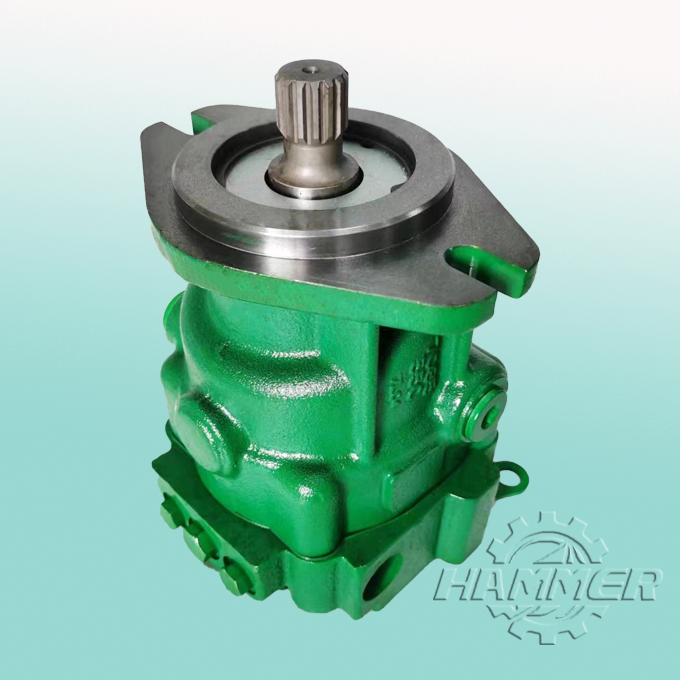
What is the working principle of hydraulic motor?
author: Hammer
2024-09-03
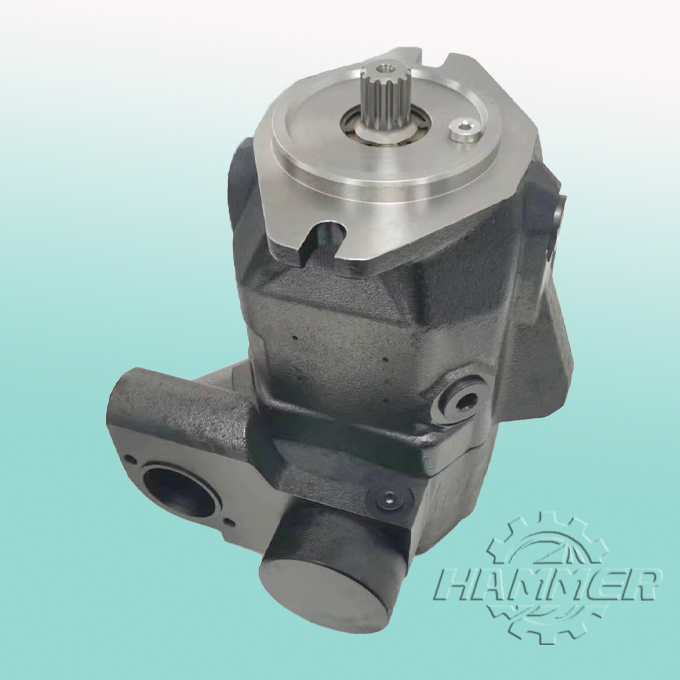
A hydraulic motor is a device that uses hydraulic principles to convert a certain pressure of liquid into mechanical energy for driving. Hydraulic motors are mainly composed of hydraulic pumps, motor bodies, rotors, and transmission shafts.
The working principle of hydraulic motor is as follows:
The working principle of hydraulic motor is as follows:
1.The working principle of hydraulic motors is based on the law of conservation of momentum and the principle of incompressibility of liquids. There are one or more impeller rotors inside the hydraulic motor. When liquid enters from the inlet of the motor, the hydraulic pump delivers a certain pressure of liquid to the motor, and the liquid enters the chamber inside the motor through the pipeline.
2.When the liquid enters the chamber inside the motor, the pressure and flow rate of the liquid increase, causing the impeller rotor to start rotating. The rotation of the rotor is mainly achieved by the flow of liquid and the force generated by the impact on the rotor blades. The liquid flows from the high-pressure area to the low-pressure area, pushing the rotor blades to continuously rotate.
3. The rotor inside the motor converts the direction of rotation into rotational motion at the output shaft end through a connecting rod mechanism. At the same time, the rotation of the rotor will also drive the output shaft to rotate together, thereby generating mechanical energy output. The output torque of the motor is related to the pressure and flow rate of the liquid.
4.The output torque and output speed of the motor can be achieved by adjusting the liquid pressure and flow rate, usually by adjusting the hydraulic control valve to control the liquid flow rate and pressure. When increasing liquid pressure or flow rate, the output torque and speed of the hydraulic motor will increase.
5.The efficiency of hydraulic motors is mainly affected by internal losses, liquid viscosity, and mechanical friction. In order to improve the working efficiency of hydraulic motors, measures are usually taken to reduce viscosity loss and mechanical friction loss, such as optimizing the design of liquid flow channels and using high-quality seals.
6. Hydraulic motors are commonly used in applications that require continuous rotational output and high torque output, such as construction machinery, agricultural machinery, lifting equipment, etc. The working principle of hydraulic motors is simple, the structure is compact, and the output torque and speed can be adjusted, making them widely used in industrial and agricultural fields.
In short, a hydraulic motor is a device that utilizes hydraulic principles to convert liquid pressure into mechanical energy output. Its working principle is based on the law of conservation of momentum and the principle of incompressibility of liquids. It drives the rotor to rotate through the flow of liquid and the impact force on the rotor blades, which in turn drives the output shaft to rotate, achieving mechanical energy output. Hydraulic motors have important applications in fields such as construction machinery and agricultural machinery equipment.
Some Practical Skills Of Gear Pump Maintenance
Related Article